Yes. You can live in Prescott Valley, Arizona, without feeling like you’re living in a big city. In fact, that balance is one of the reasons people consider moving here.
Prescott Valley has grown, and you’ll find everyday conveniences, shopping, restaurants, healthcare, newer neighborhoods, and services close to home. But it still feels very different from living in a major metropolitan area like Phoenix.
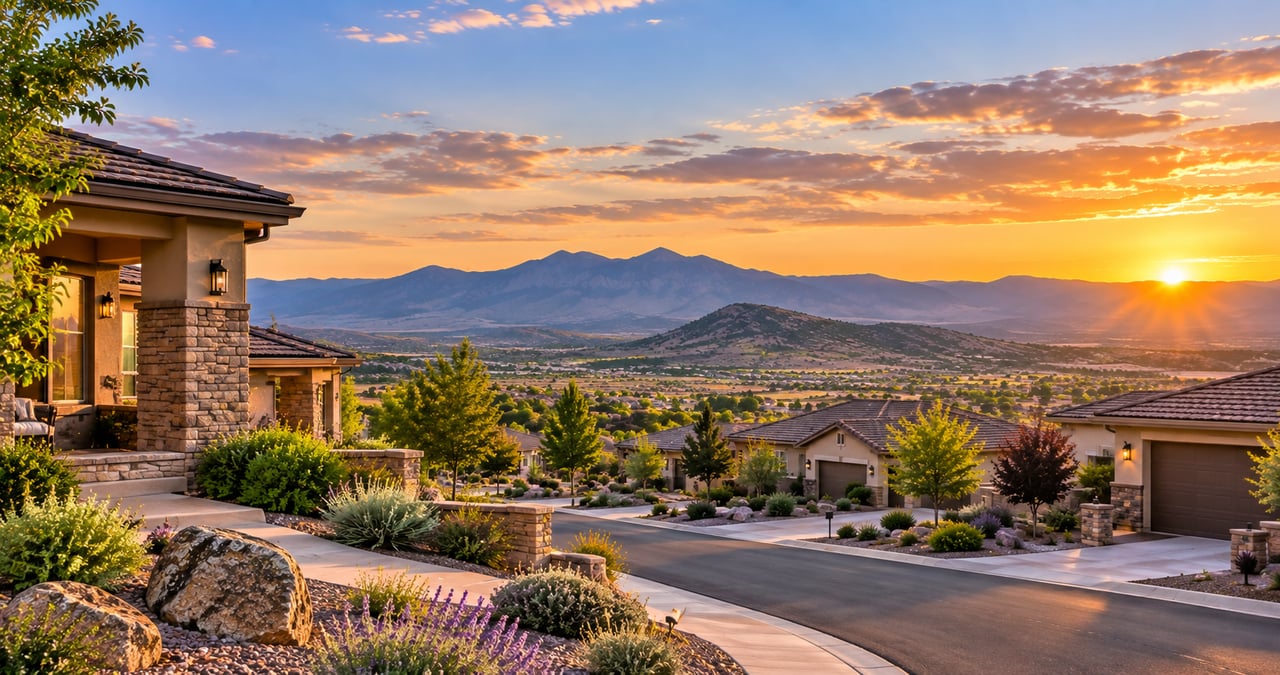
There’s more breathing room. The outdoors are part of everyday life. And depending on where you choose to live, home can feel surprisingly quiet.
For many of the buyers we help in Prescott Valley, Prescott, and the Quad Cities, that balance matters more than simply finding a house.
They’re really asking, “Can I build a life here that feels like me?”
That’s the better question.
What Does Living in Prescott Valley Actually Feel Like?
Prescott Valley isn’t a tiny mountain town anymore. It’s a growing community with nearly 49,000 residents, and State Route 69 serves as a major commercial corridor for shopping, restaurants and everyday services.
But numbers don’t tell you what it feels like to live here.
Much of Prescott Valley is residential. You can leave a busy commercial area and, within a relatively short drive, be back in a neighborhood where the pace feels considerably quieter.
You’re also living close to the outdoor lifestyle that defines this part of Northern Arizona. Hiking, mountain biking, camping, lakes and the Prescott National Forest are all part of the broader lifestyle.
That creates an interesting combination.
You can get groceries, grab dinner, run errands and take care of normal life without giving up the sense that you’ve moved somewhere smaller.
Is Prescott Valley Becoming Too Big?
This is a fair question, especially if you’re moving to Prescott Valley specifically to get away from congestion.
Prescott Valley is growing. New housing and development are noticeable, and longtime residents sometimes have very different opinions about that growth.
Online discussions from residents reflect both sides. Some people value the small-town atmosphere and access to the outdoors, while others feel development and traffic have changed the community.
So if your goal is complete isolation, Prescott Valley probably isn’t what you’re looking for.
But if you want access to modern conveniences without moving into a major urban center, it can be a compelling middle ground.
Your Neighborhood Makes a Big Difference
This is where buying based on lifestyle becomes important.
Communities and areas around Prescott Valley can feel very different depending on the amount of space you want, the type of home you prefer, how close you want to be to shopping and how much driving you’re comfortable doing.
Buyers commonly explore areas such as:
Granville
Pronghorn Ranch
Viewpoint
Jasper
Coyote Springs
The broader Prescott Valley market also includes ZIP codes such as 86314 and 86315.
Rather than asking which neighborhood is “best,” we encourage buyers to think about what they want an ordinary Tuesday to look like.
Do you want to walk outside and immediately feel removed from activity?
Would you rather be five minutes from shopping?
Do you want more land?
Would you trade a longer drive for more privacy?
Those answers often tell us much more than a list of popular neighborhoods.
Prescott Valley vs. Prescott: Which Feels More Like a Small Town?
People relocating to the Prescott area frequently compare Prescott Valley with Prescott.
They’re close geographically, but they don’t feel identical.
Prescott has its historic downtown, Courthouse Plaza, older neighborhoods and a stronger traditional mountain-town character.
Prescott Valley tends to feel newer and more suburban. It has larger residential developments and a commercial corridor designed around everyday convenience.
Interestingly, people discussing relocation online frequently describe Prescott Valley as an alternative for someone who wants to be close to Prescott and the outdoors while having access to newer housing and amenities.
You don’t necessarily have to choose one lifestyle over the other, either.
One advantage of living in the Quad Cities area of Arizona is that Prescott, Prescott Valley, Chino Valley and Dewey-Humboldt function as neighboring communities. You can live where the housing and daily rhythm fit you while still enjoying what the surrounding communities offer.
What Might You Miss About a Big City?
If you’re coming from Phoenix, Los Angeles, Dallas or another large metropolitan area, you’ll probably notice fewer choices in certain categories.
Residents discussing life in the area commonly mention wanting greater variety in restaurants, shopping, employment and specialized healthcare. Some people occasionally travel to Phoenix or Flagstaff for things they can’t find locally.
That doesn’t automatically make Prescott Valley better or worse.
It makes it different.
And this is where we see people make better real estate decisions when they stop thinking only about bedrooms, bathrooms and square footage.
A home affects your life long after closing day.
Think About the Life You’re Moving Toward
When someone tells us they want to move to Prescott Valley because they’re tired of “the city,” we usually want to understand what they actually mean.
Are they tired of traffic?
Noise?
Summer heat?
Living too close to neighbors?
Or are they simply ready for their next chapter?
Those are different motivations, and they can lead to very different home searches.
We serve buyers and sellers in Prescott Valley, Prescott, and the Quad Cities who are motivated by lifestyle and legacy, not pressure or panic.
Our work combines the psychology and the process of real estate because a successful move isn’t simply getting through a transaction.
It’s being able to look back afterward and feel confident about why you made it.
So, Can You Really Escape the Big-City Feeling in Prescott Valley?
For many people, yes.
Prescott Valley gives you many of the conveniences you need for everyday life without recreating the experience of living in a major metro area.
It isn’t untouched by growth. There’s traffic. There’s development. And some parts of town feel busier than others.
But there are also quiet neighborhoods, open views, outdoor recreation and the ability to spend a morning in Prescott, an afternoon on a trail and an evening at home without feeling surrounded by a massive city.
If you’re considering moving to Prescott Valley, Arizona, don’t just ask whether you like the houses.
Spend some time here.
Drive the neighborhoods at different times of day. Make the trip between Prescott and Prescott Valley. Go grocery shopping. Grab coffee. Drive your potential commute.
Try living your normal life here for a day.
Because the goal isn’t simply to find a place in the Quad Cities where you can live.
It’s to find the place where the life you want to build actually makes sense.
Frequently Asked Questions About Living in Prescott Valley
Is Prescott Valley a small town?
Prescott Valley has a smaller-community feel compared with a major metro area, but it’s not a tiny town. It has nearly 49,000 residents and a growing mix of residential communities, shopping and services. The experience can vary considerably depending on where in Prescott Valley you live.
What is the difference between Prescott and Prescott Valley?
Prescott is known for its historic downtown, established neighborhoods and mountain-town character. Prescott Valley generally feels newer and more suburban, with planned communities and convenient access to shopping and services. Many buyers consider both before deciding where to live.
Is Prescott Valley a good place to move from Phoenix?
It can be a strong fit for someone who wants a smaller-community lifestyle and greater access to Northern Arizona's outdoors while retaining everyday conveniences. The tradeoff is that you won't have the same depth of restaurants, employment, shopping and specialized services found throughout metro Phoenix.
Do you have to drive to Phoenix for everything?
No. Most everyday needs can be handled within Prescott Valley and the surrounding Quad Cities. However, residents sometimes travel to Phoenix or Flagstaff for specialized medical care, certain shopping or services, major events and other big-city amenities.
Is Prescott Valley quieter than Prescott?
It depends heavily on the neighborhood. Prescott Valley has busy commercial areas and growing residential developments, while other parts feel much quieter. Prescott also varies from an active downtown core to peaceful residential and forest-adjacent areas. It’s worth experiencing both communities rather than choosing based on their names alone.
Is Prescott Valley growing too fast?
Prescott Valley is growing, and development is one of the issues residents regularly discuss. Some appreciate the additional housing and conveniences, while others are concerned about traffic, infrastructure and losing some of the area's smaller-town character.
What should I know before moving to Prescott Valley?
Look beyond the house itself. Consider your commute, proximity to Prescott, healthcare needs, outdoor lifestyle, neighborhood density and how often you expect to travel to Phoenix. Spending several days experiencing the area like a resident instead of a tourist can make your decision much clearer.
Whether you’re buying, selling, downsizing, or relocating, Home Team Prescott offers honest, hands-on support designed to make the process feel less stressful and more manageable. We proudly serve Prescott, Prescott Valley, Chino Valley, Dewey-Humboldt, and Mayer.
Home Team Prescott
Real Estate Team in Prescott Valley, Arizona
Helping buyers and sellers make life-enhancing moves with clarity and confidence
The Results You Want With the Service You Remember
